Aircraft Scrap: Not Always What You Expect
The Good, the Bad, and the Complex.
1/16/20262 min read
Aircraft Scrap: Not Always What You Expect
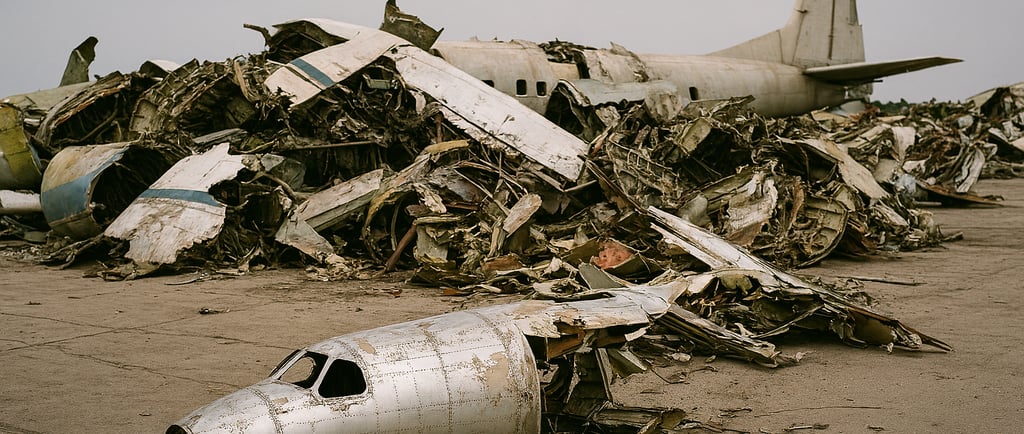
It would be natural to assume that scrap arising from aircraft salvage is inherently high‑value and high‑quality. In reality, this is often not the case. While aircraft are high‑technology machines, the materials used in their construction can present significant challenges at end‑of‑life. When dealing with aviation scrap, there are several key areas to consider.
Fuselage Materials and Recycling Challenges
An aircraft fuselage is typically constructed from aluminium alloys with a high copper content—often up to around 5%. These materials are generically known as duralumin, an early class of aluminium alloys dating back to the early 1900s. Modern aircraft continue this lineage, using 2000‑series aluminium alloys such as 2014 and 2024.
While these alloys offer excellent strength‑to‑weight ratios and fatigue resistance, their technical advantages work against them when it comes to scrap value. The copper content makes the material less desirable for many secondary aluminium applications, reducing its disposal price.
Compounding the issue is the complex, mixed‑material nature of a fuselage. Aircraft structures are assembled using thousands of rivets—often with steel cores—alongside windows, plastics, insulation, sealants, and other non‑metallic components. From a recycling perspective, this level of material contamination makes fuselage scrap a difficult and labour‑intensive proposition.
Landing Gear: Heavy, Complex, and Costly
Landing‑gear assemblies present a similar challenge. While they contain large quantities of Aluminium and stainless steel, these are often combined with ferrous material and numerous fasteners. Additionally, the safe disposal of aircraft tyres can be extremely costly, further eroding the overall recovery value of the assembly.
Engines: Where the Real Value Lies
By far the most interesting—and valuable—source of aircraft scrap comes from engines. Whether turbofan or turbojet, aircraft engines represent an exceptionally high concentration of premium metals.
Turbofan engines, in particular, contain significant quantities of superalloys (often with nickel contents exceeding 50%) as well as titanium alloys. These materials are specifically engineered to withstand extreme temperatures and stresses, making them highly sought‑after in secondary markets.
As a very general rule of thumb, the closer a component is to the heat source, the more valuable the material is likely to be. Hot‑section components such as blades, vanes, and discs typically command the highest prices due to their alloy composition and metallurgical complexity.
Light FS can assist with the marketing of aircraft scrap, helping owners, operators, and dismantlers identify the most valuable fractions and connect them with specialist buyers. Light FS can help ensure that complex aviation scrap is positioned correctly in the market, and realises its full potential value.
Contact
Helping you manage all areas of material disposal.
Phone
info@lightfs.com
© 2025. All rights reserved.