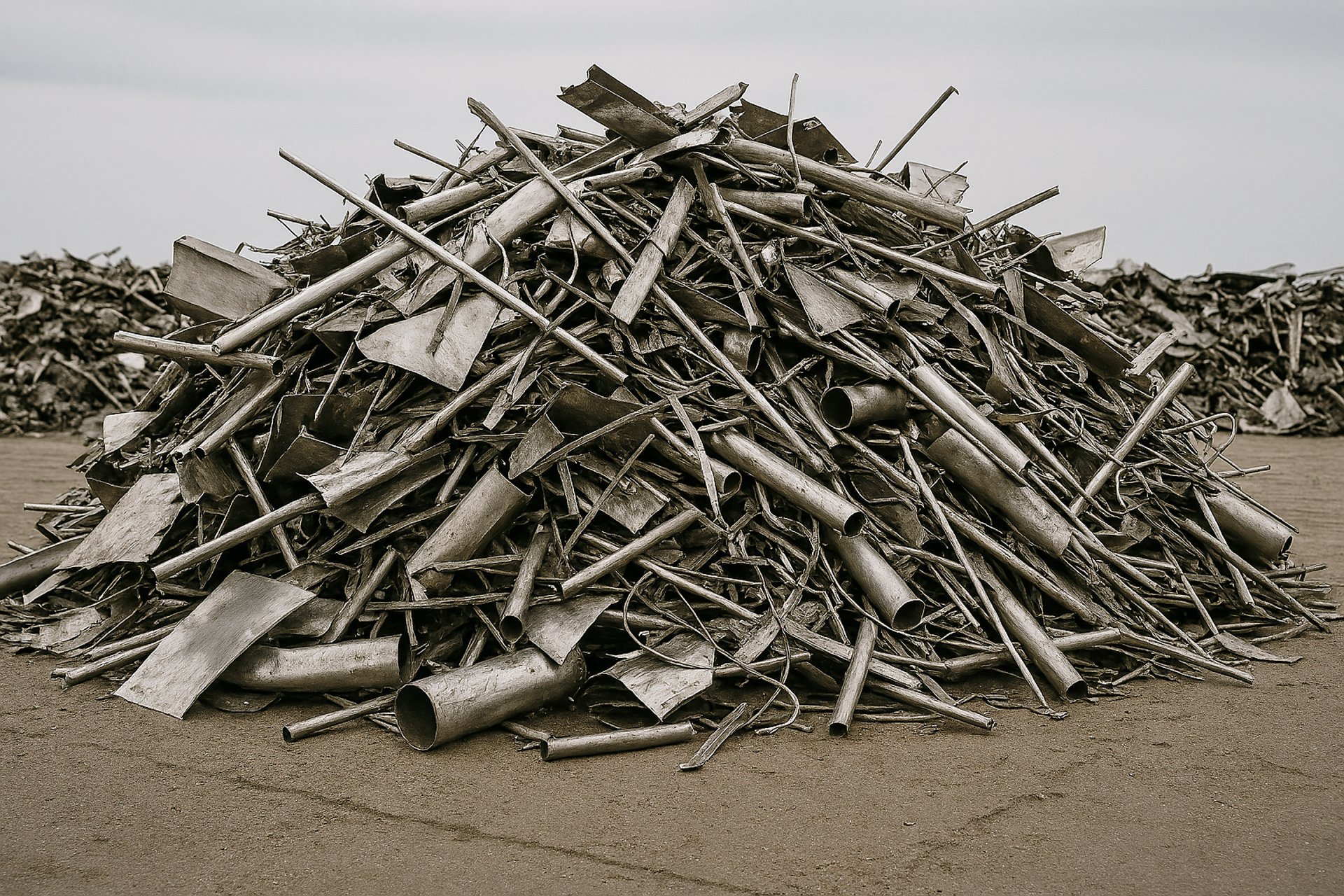
Factors Effecting the Value of Stainless Steel Scrap
Grades of stainless steel.
1/18/20262 min read
Stainless Steel Scrap: Value, and Recycling Considerations
Stainless steel scrap plays a vital role in the global metals and recycling industry. Known for its corrosion resistance, strength, and durability, stainless steel is used extensively across sectors such as construction, food processing, energy, automotive, and aerospace. At the end of its service life, this material retains significant value—provided it is correctly identified, processed, and marketed.
What Makes Stainless Steel Valuable?
The value of stainless steel scrap comes primarily from its alloying elements. Unlike carbon steel, stainless steel contains chromium (typically a minimum of 10.5%), which forms a passive oxide layer that protects the metal from corrosion. Many stainless grades also contain varying amounts of nickel, molybdenum, manganese, and, in some cases, copper.
Nickel and molybdenum in particular are high‑value metals with volatile market pricing. As a result, stainless steel scrap value tends to track these underlying alloy markets rather than base steel prices.
Common Stainless Steel Scrap Grades
Stainless steel scrap is generally classified by grade family, each with different properties and market values:
200 Series (Austenitic)The 200 series stainless steels use less nickel and more manganese than the more costly 300 series. Commonly used for Household items, domestic appliances, cutlery, and some automotive parts (often internal). The lower nickel content equates to a lower scrap value than the 300 Series materials
300 Series (Austenitic)
Grades such as 304 and 316 are the most common. They contain significant nickel (and molybdenum in the case of 316), making them highly desirable to foundries.400 Series (Ferritic and Martensitic)
These grades contain little or no nickel. While still corrosion‑resistant, their scrap value is significantly lower than the 200 & 300‑series materials.Duplex Stainless Steels
Combining austenitic and ferritic properties, duplex grades are increasingly used in demanding environments. Not as generally as common as the 200 & 300 Series materials, but value can be attractive due to higher chromium and added molybdenum content.
Accurate grading is essential, as misclassification can quickly erode value or make material unattractive to buyers.
Sources of Stainless Steel Scrap
Stainless steel scrap arises from a wide range of sources, including:
Industrial manufacturing offcuts and swarf
Food and pharmaceutical processing equipment
Chemical and petrochemical plant dismantling
Automotive and transport components
Domestic and commercial appliances
While some scrap streams are relatively clean and homogeneous, others may be contaminated with carbon steel, plastics, rubber, or coatings. The degree of preparation directly impacts saleability and price.
Recycling and Processing Challenges
Although stainless steel is infinitely recyclable, it is not without challenges. Mixed grades, magnetic contamination, coatings, and embedded non‑metallics can all complicate processing. Modern recyclers rely on a combination of mechanical separation, X‑ray fluorescence (XRF), and optical sorting technologies to achieve accurate separation.
Clean, well‑segregated scrap will always command a premium over mixed or poorly prepared material.
What Grade do I Have?
There is a separate article on this blog on the subject of identifying material
Maximising Value in Stainless Steel Scrap
To achieve the best returns, scrap stainless steel should be:
Correctly identified and segregated by grade
Free from excess contamination and attachments
Marketed with accurate descriptions and specifications
Sold into the most appropriate end market
Understanding buyer requirements and price drivers—particularly nickel and molybdenum exposure—is key to successful transactions.
How Light FS Can Help
Light FS can assist with the marketing of stainless steel scrap, helping generators, processors, and traders maximise value from their material. With strong market knowledge and access to specialist buyers, Light FS ensures that stainless steel scrap is correctly positioned, transparently marketed, and sold at the best achievable price.
Contact
Helping you manage all areas of material disposal.
Phone
info@lightfs.com
© 2025. All rights reserved.